8.07.2013

A PRIVILEGE SPEECH BY THE HONORABLE REPRESENTATIVE MAGTANGGOL T. GUNIGUNDO I IN COMMEMORATION OF BUWAN NG WIKA 2013

August 5, 2013

HON. MAGTANGGOL T. GUNIGUNDO I

Ginoong Ispiker, bilang paggunita sa Buwan ng Wika, nais ko pong talakayin ang tungkol sa estado ng mga lengguwahe ng ating bansa at ang tungkol sa ahensyang inatasan upang pangalagaan ang mga ito. 

Gusto ko pong magsimula sa mga pangalang “Tagalog”, “Pilipino”, at “Filipino”, Ginoong Ispiker.  Makailang beses na rin nating binagu-bago ang pangalan ng ating pambansang wika nang hindi naman naiiba ang esensya nito. Sa mga paaralan, tinuruan tayo na ang “Tagalog / Pilipino” ay tumutukoy sa dating pambansang wika na ang basehan ay Tagalog lamang.  Tinuruan din tayo na ang “Filipino” naman ay ang kasalukuyang wikang pambansa na nakabatay sa lahat ng wika ng Pilipinas.

Parang may mali sa ganitong mga haka-haka, Ginoong Ispiker.

Kumbisido ako, Ginoong Ispiker, na ang “Tagalog”,“Pilipino”, at “Filipino” ay iisang lengguwahe lamang.  Bakit ko po nasabi ito?  Ito’y sapagkat malayang nagkaka-intindihan ang mga nagsasalita ng Tagalog/Pilipino at nagsasalita ng Filipino.  Sa wikang Ingles, mutually intelligible ang Tagalog/Pilipino at Filipino.  Ito ang pangunahing paraan ng mga linguista para malaman kung ang dalawa o higit pang pananalita ay nabibilang sa iisang wika o magkakaibang wika.  

Ang isa pang panukat para malaman kung nagsasalita ang mga tao ng iisang wika o magkaibang wika ay ang gramatika.  Ang mga pananalita ay itinuturing na kabilang sa isang wika kung magkapareho ang kanilang gramatika.  Ang tanong ay:  Magkaiba ba ang grammar o balarila ng“Tagalog”, “Pilipino”, at “Filipino”? Malinaw po na hindi.  Kung gayon, ang “Tagalog”, “Pilipino”, at“Filipino” ay nabibilang lamang sa isang wika.

The next question is:  Are other speech varieties, like Binisaya, Ilokano, Hiligaynon to name a few, languages or dialects?  The answer is they are full-fledged languages, Mr. Speaker, since they are not mutually intelligible and they have different grammars.  In fact there are 170 separate Philippine languages. They are NOT “dialects.”  The term “dialect” is reserved for geographical linguistic variants, like Tagalog-Bulacan, Tagalog-Batangas and Tagalog-Quezon, or Cebuano-Binisaya, Iliganon-Binisaya, or Davao-Binisaya.  When answering “yes”, for instance, there are Ilocanos who say either “wen” or “wən”.  Some have the “e” sound while others have the “ə” sound.  Despite the variation in pronunciation, intonation and vocabulary, these Ilokano speakers can understand each other, and therefore it is correct to say that they speak different dialects of the same language.

The discussion, Mr. Speaker, takes us to “Filipino” which is the name chosen for our national language under the 1987 Constitution.  As I have said, that language is supposed to be based not only on Tagalog but also on other Philippine languages.  But Mr. Speaker, I must admit that Filipino is still “evolving” into its ideal multilingual character.  At present, it is still predominantly Tagalog/Pilipino and probably will stay that way for several generations.  I don’t find anything fundamentally wrong with that so long as this language is accepted by our people.  After all, it is the people who use and sustain languages and not those who study them.     

But a quarter of a century after the national language was renamed Filipino, most people still refer to it as Tagalog, except in school where it is called Filipino in reference to the subject.  They call it Tagalog because they recognize it to be the same language they have come to know a long time ago and because they refuse to kowtow to the arbitrary wishes of those who want to police the expressions of our national and collective life.

Mr. Speaker, the designation of Tagalog, then Pilipino, and afterwards Filipino as wikang pambansa, has led to a dangerous misconception that our pambansang panitikan or national literature should be written in the national language.   Thus, any work written in a language other than in the wikang pambansa is not considered part of the national literature but of the regional literature. 

The over-focusing and over-privileging of one region’s language and literary imagination has a parallel development in the writing of our nation’s history.  The struggles in the various regions for freedom and democracy have been ignored in favor of the political center’s narrative of the making of the nation.  Hence, the pantheon of heroism in the national struggle marginalizes the roles of Dagohoy of Bohol, Leon Quilat of Cebu and Sultan Kudarat of Mindanao, among many others in successive generations of Philippine heroes.      

In order to correct these historical and cultural inequities, Mr. Speaker, a kambyo sa pananaw—as some Bisayan friends call it—is very much in order, especially on how we value our linguistic and cultural diversity.  It is this diversity that we must recognize as our social and cultural resource, and our intellectual capital. By this diversity we shall be able to evolve a truly liberating education, an education that teaches our people the collective virtue of a Philippine nation built upon the variety of the memories,experiences, dreams, aspirations, and ambitions of our different ethno-linguistic communities.  Our people know we are many, and out of this many-ness we are committed to be one national community.  This, Mr. Speaker, is our guiding light in nurturing our cultural pluralism.

It must be pointed out that while the people have embraced Filipino as our common language, they have done so without repudiating their own native languages.  According to the latest census, the number of speakers of large-sized languages (such as Tagalog, Binisaya, Iloko, Bikol, Waray, Kapampangan, Maguindanao) and medium sized-languages (such as Kankanaey, Ibanag, Manobo, Ifugao, Masbateño) continue to grow.  It is the small languages (such as the Aeta languages) that appear to be threatened with extinction.

The country’s native languages, including Filipino sign language of our Deaf population, have been given official status through the institutionalization of mother tongue-based multilingual instruction in our education system.  Republic Act No. 10533 signed by President Aquino last May 15, 2013, provides that basic education shall be conducted in the learner’s native languages throughout kindergarten and the elementary grades.  English and Filipino shall be gradually introduced beginning Grade 4 until such time that these can become the primary languages of instruction at the secondary level.

The multilingual provisions in RA 10533, also known as the K-12 law, are incontrovertible evidence that our country has shifted from a “one nation, one language” mindset to one that recognizes our linguistic and cultural pluralism.  We are witness to the steady realization of President Aquino’s vision of using English to connect with the world, the national language to connect with our country, and the native languages to connect with our heritage.  In short, Mr. Speaker, that kambyo sa pananaw that I am talking about has already taken place among our people.       

However, these goals have been muddled by the very institution we have entrusted to take care of our languages so that they may survive and thrive.  Recently, the Komisyon sa Wikang Filipinoannounced that it is changing the official name of our country from “Pilipinas” to “Filipinas”. 

Is KWF not aware of Sec. 2, Article XVI of the 1987 Constitution that gives Congress the authority to change the name of our country?

Is KWF not aware of Republic Act no. 8491, sections 41 and 42 that provides that the coat of arms and seal of our country  must contain the words “Republika ng Pilipinas” with a ”P” not “F”.  

Is KWF not aware that the President uses Pilipinas to refer to our country, as he did in his State of the Nation Address? If no less than the President of the Republic of the Philippines uses “Pilipinas” in his SONA, then I am certain without fear of being validly contradicted that this is official.     

In other countries, the responsibility of establishing principles, policies and procedures for the naming of places and other geographical sites rests on a geographical names board, and not on a language agency. In the Philippines, changing the name of our country is the constitutional mandate of Congress. 

Republic Act No. 7104 which was enacted in 1991, created the Komisyon sa Wikang Filipino, our national language agency. Section 6 of this law explicitly states:  “No one shall be appointed as commissioner unless he/she is a natural-born Filipino citizen, at least thirty (30) years old, morally upright and noted for his/her expertise in linguistics, the culture and the language of the ethno-linguistic region and the discipline he/she represents.”   It is clear from the wordings of the original law that a KWF commissioner must be noted for his/her expertise in linguistics. 

The original Implementing Rules and Regulations dated April 15, 1992 accurately reflects the text of R.A. 7104 pertaining to this particular qualification on linguistic expertise.

Curiously, when the proponents of “Filipinas” took over the language agency, one of the first things that they did, Mr. Speaker, was to promulgate a new IRR on February 13, 2013 that deleted this particular qualification.  Instead of “kadalubhasaan sa linggwistika”, we now find in the 2013 IRR  “kadalubhasaan sa wika, panitikan, kultura, at disiplinang kinakatawan”

“Kadalubhasaan sa wika at panitikan” translates to“expertise in language and literature”, Mr. Speaker, which is not the same as “expertise in linguistics.”  The former refers to the use of language; the latter to the scientific study of the nature of languages.  One may be good at using a language in writing and in speech, but may be completely ignorant of how languages are described in scientific terms, and hence, on how a language works.

Many are asking, Mr. Speaker:  Are the new KWF officials not experts in linguistics? Were the new IRR of 2013 written to justify their appointment?   I call on my colleagues in the Commission on Appointments to scrutinize the qualifications of these KWF officials on the basis of the original wordings,spirit and intent of RA 7104. It is an accepted legal principle that the law is superior to any implementing rules and regulations.    

Mr. Speaker, let me be straightforward about all these.  I think that it is time we re-invent the Komisyon sa Wikang Filipino and discard the “one nation, one language” concept under which it was built. 

In its ashes, let us establish a Komisyon ng mga Wika sa Pilipinas or Commission on Philippine Languages.  Let us inscribe in its banner “one nation,many languages” as its official motto, and declare “respect for all Philippine languages and cultures” as its guiding principle. 

The new Komisyon shall undertake, coordinate, and promote research for the development, propagation, and preservation of Philippine languages, including the national language, without valorizing one or two languages and marginalizing others.   

The new Komisyon shall have regional sub-commissions composed of representatives and staff from the various languages and cultures in the regions who will carry out most of the commission’s study, research, development, and publication functions. 

The new Komisyon shall be governed by a board consisting of the heads of these sub-commissions, democratically chosen by their constituents and whose appointments are affirmed by the President.

Bilang pangwakas, nais ko pong isalaysay sa inyo ang isang katutubong paniniwala sa pagpapalit ng pangalan ng bata. Kapag ang bata ay nagkaroon ng malubhang sakit, nakasanayan nang palitan ang kanyang pangalan. Ginagawa raw ito upang iligaw ang masasamang espiritu at hindi sila makapagdulot ng sakit sa bata. Magandang kuwento ito, Ginoong Ispiker, sapagkat walang iniba ito sa ginagawa nating pagpapalit ng pangalan ng ating mga maysakit na institusyon nang hindi naman ginagamot ang karamdaman ng mga ito. Walang katuturan ang pagpapalit ng pangalan kung hindi natin matukoy ang sakit at mahanapan ito ng mabisang lunas.

Maraming salamat po, Ginoong Ispiker.

Statement of support for the 3 HS students who were expelled for speaking Ilocano in school


170+ Talaytayan MLE’s STATEMENT OF SUPPORT FOR THE ILOKANO STUDENTS


This statement is being issued in support of Kleinee Bautista, Carl Andrew Abadilla, and Samuel Respicio, three Ilokano students expelled from their school, Saviour’s Christian Academy by the school president, Rev Dr Brian Shah.

The expulsion of these students clearly suggest the urgency of rethinking and revisiting key issues related to language rights and to emancipatory education, two values 170+ Talaytayan MLE hold dear.

We wish to enumerate them here: one, their speaking Ilokano, an act prohibited in that school’s speak-English-only policy; two, their having been expelled without due process; three, the relevance or the lack of it, of that school’s policy in the holistic education of these young people; and four, the legal context of the school regulation vis-à-vis the Philippine government’s educational policy on mother tongue-based multilingual education.

We are issuing this statement in our capacity as a non-government organization whose aim is to help in evolving an emancipatory educational paradigm for all peoples of the Philippines, a paradigm based on the inconvertible truths of diversity, linguistic justice, cultural democracy, and human rights.

In light of this new direction of Philippine basic education, we find this act of Rev Shah unacceptable, and thus, call for his resignation from that school which he claims as his own school.

Likewise, we commiserate with these three students who have now become symbols of oppression, of continuing mis-education, and of the need to address the fundamental reality of multiplicity in this country, a reality that must always be taken into account in an attempt to equip young people with the needed life-long learning skills and competencies.

We wish to express here our position on the matter.

First, the prohibition of the Ilokano language (and other native languages) in this school, and in any school in the Philippines under the supervision of the Department of Education, is counterproductive to the students, and their expulsion because of the criminalization of their act of speaking in their native tongue is unjust and unfair.

Second, due process remains a bastion of a decent interpretation of justice; we deny due process to those perceived violators of a school regulation and we deny them justice.

Third, in the holistic education of students, the use of their native language follows the basic rule in education of starting every student from what that student knows. What the student knows in the beginning, a knowledge that needs expansion, elaboration, and integration, is what his first, native, or mother language mediates.

Fourth, this act of depriving the students of their native language particularly in their school community where learning ought to happen is contradictory to the very principles of the Philippine government’s educational directive on the mother tongue.

In all four counts, we find Rev Shah’s actuation short of what is acceptable, and thus, we are calling for his resignation from his post as president of that school, and if he is a foreigner who has abused his stay in this country, to leave this country immediately.

http://www.gmanetwork.com/news/story/321073/news/specialreports/for-speaking-ilokano-3-students-asked-to-leave-christian-school

http://www.rappler.com/nation/35762-students-expelled-speaking-ilocano

7.08.2013

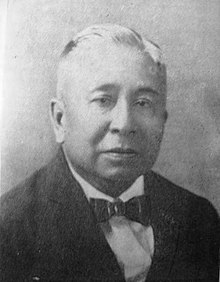
Isabelo delos Reyes - Filipino Anthropologist, writer and publisher of the first Ilocano newspaper

Today, I came to know and truly appreciate the life of a fellow-Ilocano, Isabelo delos Reyes... He could have probably became a national hero because he was imprisoned for the same reason that Rizal was and was about to  die in the same way, but probably because he had so many children that God spared him from martyrdom. I wonder why he has not been hailed as one of the known heroes. Was it because he defied so strongly the Roman Catholic Church by founding the Philippine Independent Church?

I was particularly struck that he published the first Ilocano newspaper and he became a self-taught anthropologist. He was counted among the intelligentsia but maintained solidarity with the grassroots. The following write-up is taken from the program guide of the Phil Anthropology Day Celebration at the UP College of Education on July 8, 2013.

*****************
Anthropology Day activities draw inspiration from Isabelo de los Reyes, a seminal figure in the practice of anthropology in the Philippines...

Isabelo de los Reyes, born on July 7, 1864 in Vigan, Ilocos Sur to the Ilocana poet Leona Florentino, was at an early age placed under the care of his uncle Mena Crisologo, a lawyer and a prominent member of Ilocos' literary intelligentsia. In 1880, at only sixteen years of age and without his uncle's consent, Isabelo struck out for Manila. He studied at the Colegio de San Juan de Letran and completed the bachelor's program with honors in 1883; eventually he graduated from law at the University of Santo Tomas (in 1887). As a teenager he found work with a Spanish-language newspaper whose editor Jose Felipe del Pan mentored him and introduced him to the study of folklore. Isabelo de los Reyes went on to distinguish himself in a remarkable career as a writer in a politically repressive, socially conservative, and race-conscious era. In his life he married three times and had 27 children. He became a councilor of Manila and a senator. He died in 1938.

Isabelo de los Reyes confronted both Spanish and American colonialism in prolific and incendiary writings. He would own a printing press, build political parties, campaign for Philippine representation and eventually independence, be instrumental in the formation of an independent national church (Iglesia Filipina Independiente in 1902), and organize the first Philippine labor federation under socialist principles (Union Obrera Democratica, 1902). De los Reyes wrote in Spanish and in Ilocano, he published what was said to be the first vernacular newspaper in the Philippines (El Ilocano, founded in 1889, and widely distributed in 12 provinces of Luzon) even as he also wrote articles for newspapers in the Visayas. His writings ranged from social commentary to historical papers that were hailed as 'extensive and thorough' in utilizing both documents and primary sources.

At age 20, he had submitted an article to a Spanish folklore journal which had “established him as a leading authority” (Kramer 1998:1028)—he corresponded with Ferdinand Blumentritt and other European scholars. Blumentritt translated his writings to German where they saw publication in Vienna by the Geographic Society. At age 23, de los Reyes won a silver medal for El Folk-Lore Filipino (1889) at the Madrid Exposicion Filipina (at around the same time when Jose Rizal, age 25, was composing Noli me Tangere in Europe [Anderson 2004:197]). Imprisonment in Bilibid in 1898 on suspicion of subversion became occasion for him to gather material from fellow prisoners and to write on the religion of the Katipunan (“Memoria sobre la Revolucion”), which he saw as the true and ancient Filipino faith brought to life by the revolutionary society. This work was completed after being deported and incarcerated in Montjuich Castle in Barcelona where he continued to gather revolutionary details among Spanish anarchists and labor leaders (Kramer 1998:1029).

Among his other published works are the books Ilocanadas (1887), Filipinas: Articulos varios sobre ethnografia, historia y costumbres del pais (1887 [contains articles on the Tinguians, the Lima Hong invasion of Luzon in 1574, and on the first rulers of Manila for which he interviewed Lacandola's descendants]), Las Islas Visayas en la epoca de la conquista (1889), Prehistoria de Filipinas (1889), the two-volume Historia de Ilocos (1890), Ang Comediang Tagalog (1904), Religion Antigua de los Filipinos (1909).

Understanding the link between the production of knowledge and the maintenance of colonial power, Isabelo de los Reyes engaged in nationalist counter-representation. Writing as a lawyer, he critically annotated Spanish legislation. He defended the comedia as a 'Filipino' art form, not just against denigration by Spaniards, but also against the Filipino elite who were embarrassed by 'backwardness' in Filipino culture. He engaged with the dominant knowledge of the West as critic- scholar and also as culture-maker; he wrote and published almanacs and compilations, and attempted translation of the Italian opera Aida into an Ilocano comedia. He espoused local knowledge and trusted in folk wisdom and 'intuition', but was not a purist; he stressed “analogues, borrowings and adaptations across cultures” (Mojares 2006:359). El Folklore Filipino contains descriptions of religious festivals, the varieties of anitos, the “names of sites and places not written on maps”. Mojares writes that Isabelo de los Reyes'

 “...primary contribution lies in the trails he opened up in the study of culture”, In El Folk-lore Filipino he “saw his work in folklore as a Filipino project, one that did not only primarily address Filipinos but involved them in a collective endeavor. He conceived it as an emancipatory project, one that did not exoticize the native or the past but was fully engaged in the realities of the present and the possibilities of the future... he “de-exoticizes” local customs by pointing to parallels elsewhere in the world, and, in a more overtly political move, arguing that “backward” superstitions may have been introduced into the country by the Spaniards themselves. 

He “de-primitivizes” folklore by focusing on its living presence in the Philippines of his own time, expanding the “folk” to include the “popular” such that the workings of the irrational colonial bureaucracy are as much the people's lore as a Tinguian ritual. In the process what he calls into view are not mere relics or survivals but the entire range of a people's lived experience.

... He subverts the pretentions to intellectual and moral superiority of Spaniards and friars by citing not only analogues between local and European superstitions but, in his style of radical mischief, positing that some of the local “barbaric” beliefs (even the Devil himself) may have been invented by the Spaniards themselves. Raising the example of a “savage” in southern Ilocos who may discover in a local fruit a better antidote to cholera, he points to what local knowledge can add to Western medical science. Alluding to the depth of indigenous knowledge about flora and fauna and climatic variations, he unsettles the reign of Western knowledge by boasting of what remains “hidden”.

More important, he looks toward the future—of Ilocos and the “nation” by claiming folklore as a means for establishing a history deeper and longer than that framed by Spanish coloniality and uncovering a cutural unity for groups characterized as an anarchy of tribes and races.... Moreover, he sees his project as a means for social selfcriticism since, seeing themselves in the mirror of their own practices, people can then proceed to reform what in their culture does not conduce to their common progress. (Mojares 2006:353-4) 

Isabelo de los Reyes presented himself as one who also “knew what the Europeans knew”. Yet among his illustrado contemporaries, de los Reyes was different; the home-grown intellectual also called himself 'brother of the forest peoples, Aetas, Igorots and Tinguians' (“hermano de los selvaticos, aetas, igorrotes y tinguianes” [Anderson 2004:204]). His comparative folklore “enabled him to bridge the deepest chasm in colonial society” which, says Anderson, lay not between colonizer and colonized lowlander, “they were all Catholics and dealt with one another all the time”, but “between all of these and those whom we would today call 'tribal minorities' – hill people, hunters and gatherers, 'head-hunters'; men, women and children facing a future of – possibly violent – assimilation, even extermination” (Anderson 2004:204).

Engaging the questions on language, race and origins of Filipinos, Isabelo worked within the grid of Western ethnology while assuming a critical stance towards Western scholarship. A 'native' writing about his own country, proud of his provincial and ethnic origins, he took perspective from both the 'inside' and the 'outside' (in his writings, the Ilocanos were 'they' and not 'we'). Isabelo de los Reyes saw in popular knowledge (“saber popular”) “the 'genius' out of which modern science itself has evolved, arguing that it is out of its specificities that Filipinos can make their own distinctive contribution to world knowledge” (Mojares 2006:363).

References

Benedict Anderson. (2004). The Rooster's Egg: Pioneering World Folklore in the Philippines. In Christopher Prendergast (ed.), Debating World Literature. Verso, London. pp.197-213

 Paul Kramer. (1998). Folklore, Science and Filibusterismo Between Empires, 1879-1901. In Elmer A. OrdoÑez (ed.), The Philippine Revolution and Beyond, Vol.2. Philippine Centennial Commission, National Commission on Culture and the Arts, Manila. pp.1026-1033

Resil Mojares. (2006). Isabelo de los Reyes. In Brains of the Nation: Pedro Paterno, T.H. Pardo de Tavera, Isabelo de los Reyes and the Production of Modern Knowledge. Ateneo de Manila University Press, Quezon City. pp.253-380